
❝ AT TWENTY-SEVEN DEGREES NORTH LATITUDE, The guide and the driver waited patiently in the Paro International Airport my late arrival. The mountain road we then take to head to Timbú It transported me that day of the Holy Innocents in 2016, in a magical and instantaneous way, to the La Hermida gorge on the way to La Franca, which in the summers of my childhood I would travel as if they were real expeditions. It was midday and, with the window down, all the fresh and at the same time resinous air mixed with the scent of the junipers and mint of the Picos de Europa, which sprang intact from the deepest memory that I still have, had flooded the car. Gensen, the guide, then began to review schedules and visits but he couldn't get me to pay attention, I was still so absorbed that only when we arrived at hotel, I actually landed in Bhutan, remote land of crows, white-tongued dragons and phalluses.
Without much awareness I ended up submerged in a wooden tub where the sweet wormwood sprinkled over the steaming water did not allow me to see some previously reddened volcanic rocks that kept that restorative bath warm (dotsho in their language) also helped by some local wine.
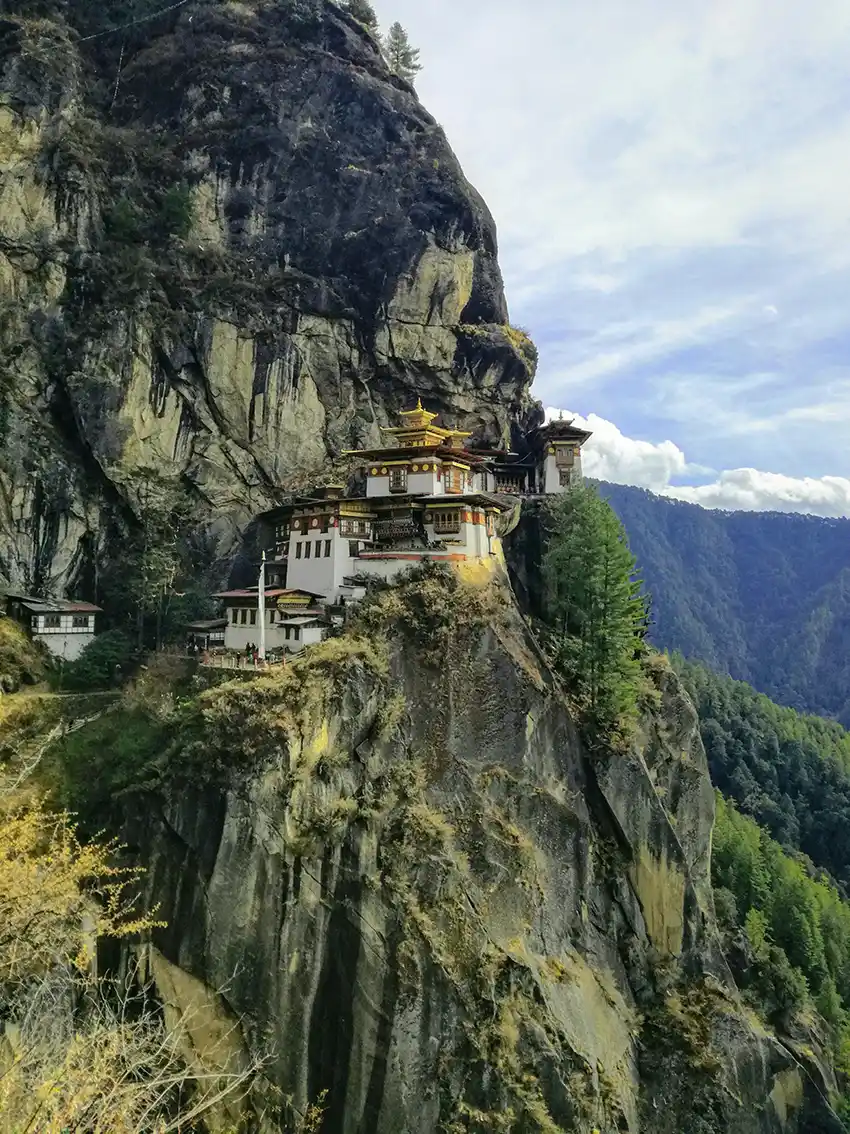
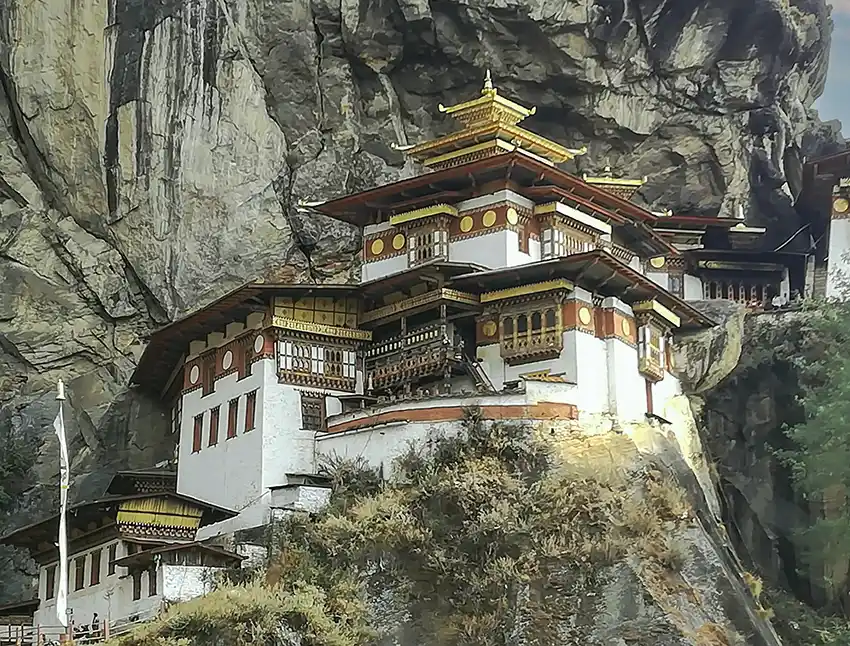
At dawn, completely recovered, we climbed to Tango Monastery with the idea of exercising against a steep path of vincas for what would be, a few days later, Bhutan's star attraction: the Tiger's Nest Monastery.
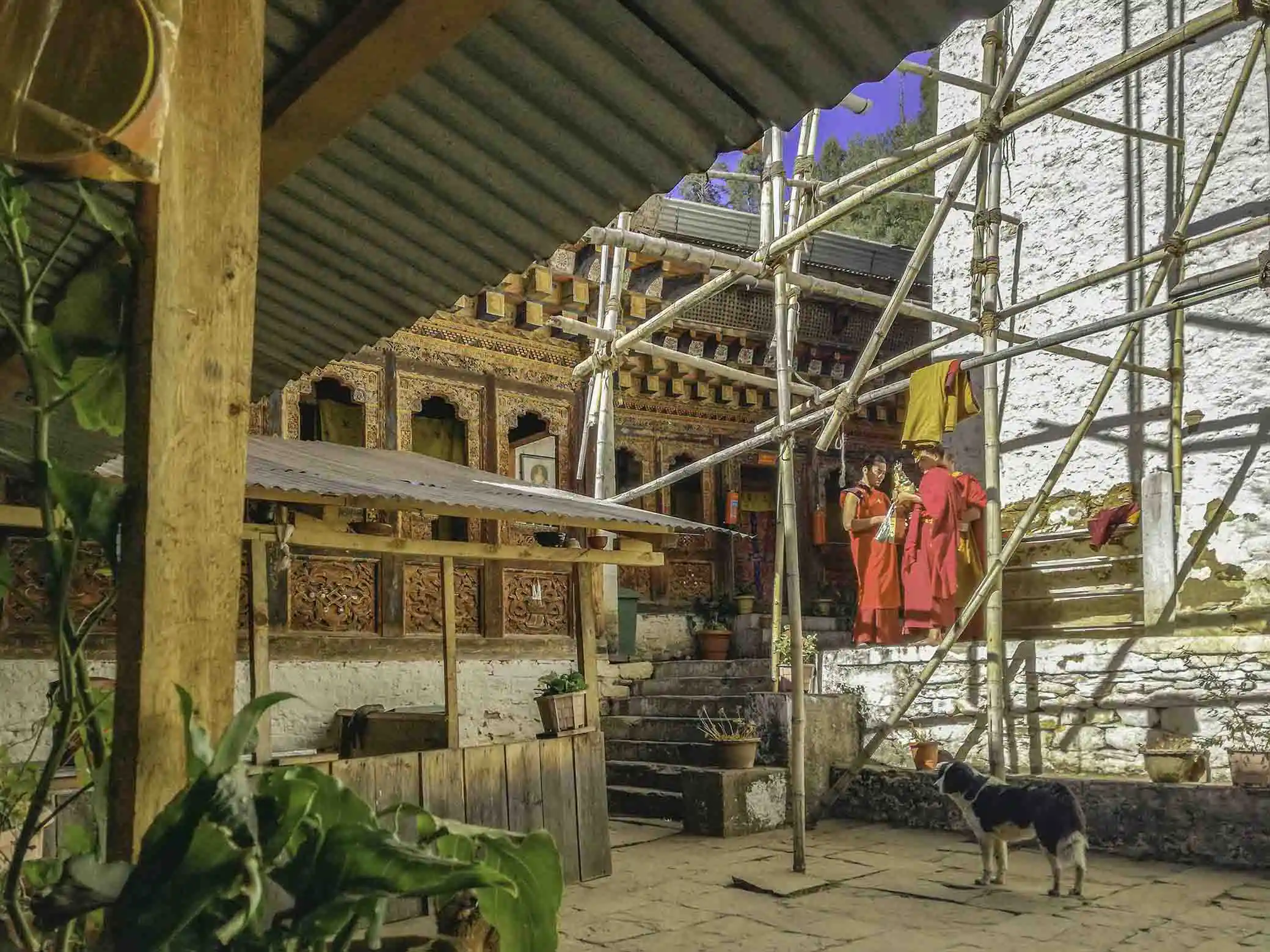
However, this fortress monastery proved to be more than just a preparatory exercise. We arrived very early in the morning, and although the mantra recitation was almost over, we squatted at the back of that not-so-large rectangular hall, just in time to share a small, unexpected lunch outdoors with novices—we were the only strangers that day—at the long tables that occupied the roof on one side of the monastery entrance, under construction, amidst the scaffolding and the laughter of those future Buddhist monks who seemed so happy. We passed by the Tashichhon Dzong,
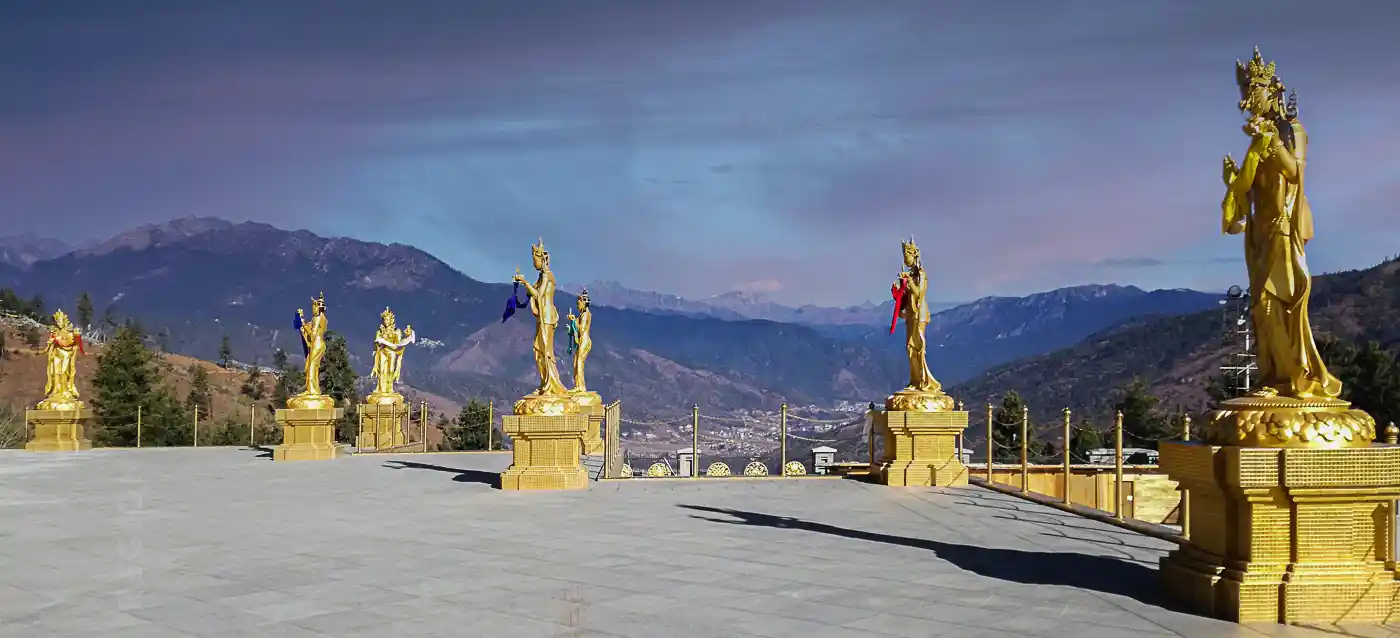
Colonnade of dakinis at the foot of the large statue of Buddha Dordenma at the exit of Timbú.
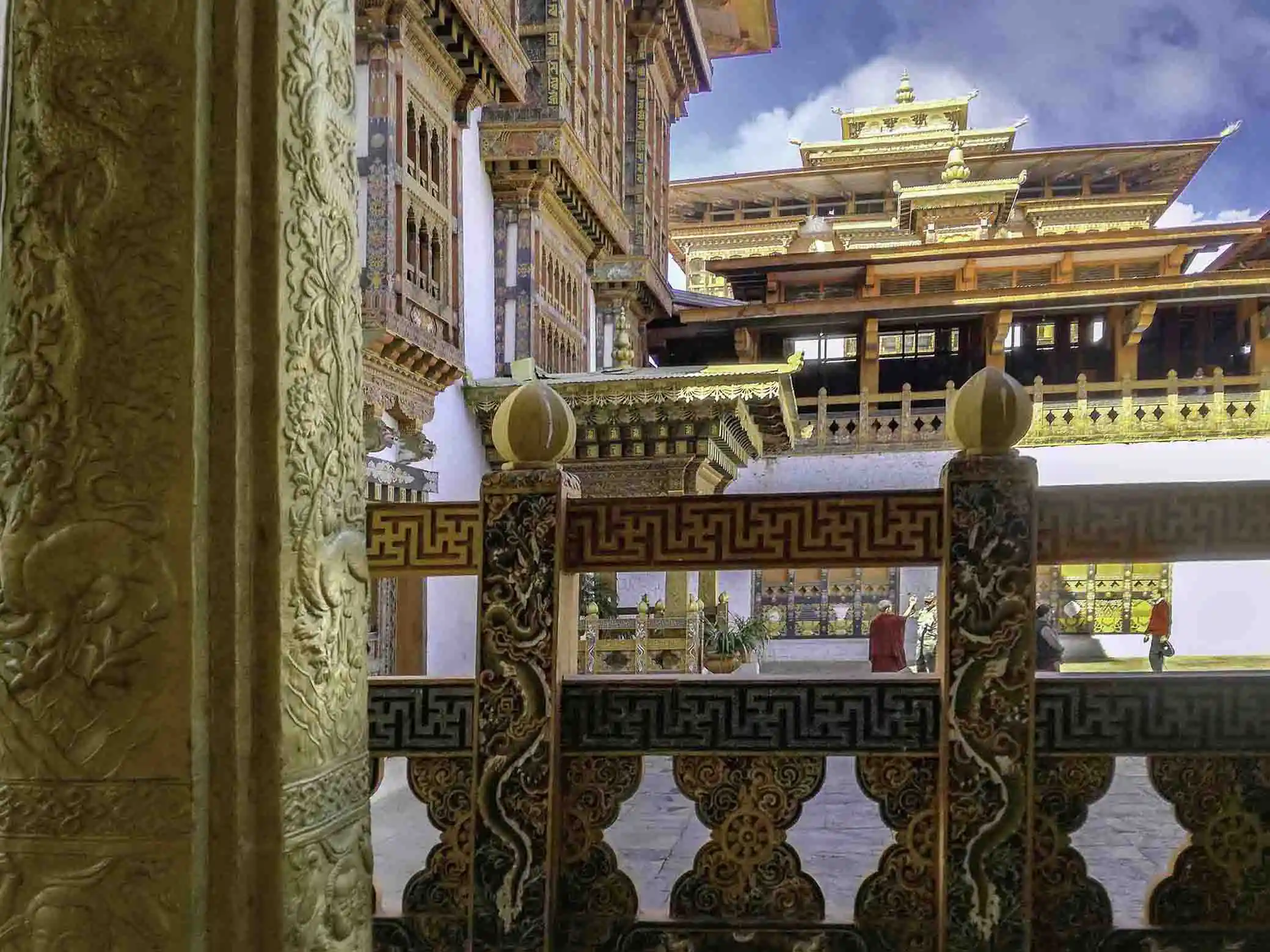
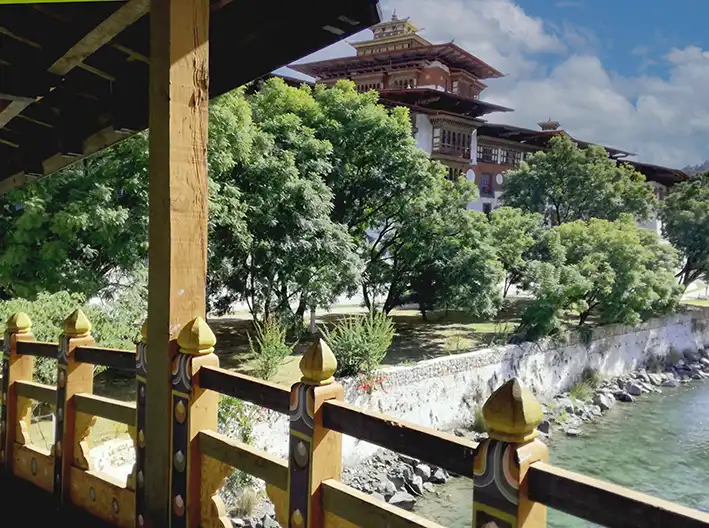
Details Pungthang Dewa chhenbi Phodrang, "Fortress Palace of Great Happiness"« in Punakha.
On the way back, as we stepped onto the shabby pier again and began to hear the voices coming from the village's street food stalls, Ako Maung suggested we pack up the bike and stop for a more leisurely lunch at a relatively nearby picnic spot. I'd been able to spot several of these modest establishments as we made our way toward the monumental escarpment, though I wasn't convinced they'd be able to feed us afterward, but I accepted my guide's suggestion.
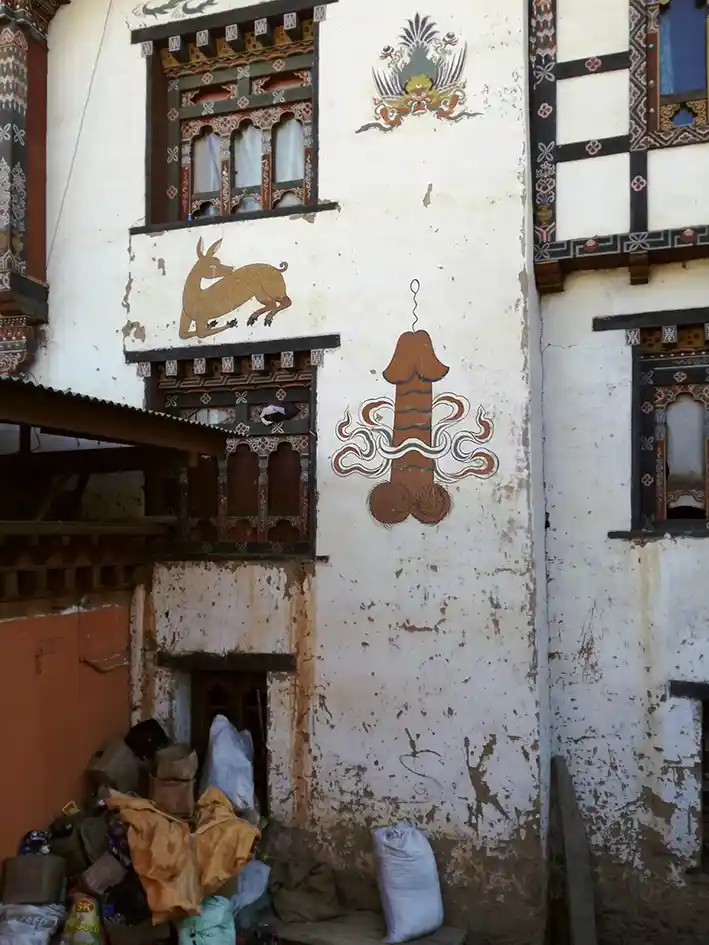
The colloquial term used in Dzongkha for cock, although not in public because the Bhutanese, as curious as it may seem after touring the surroundings of Punakha, are very reserved in high-pitched conversations, even half-jokingly, is 'pho'As in Spanish or English, there are various terms, but here they are multifaceted.
In Bhutan, for the drawings that anyone can see on the exterior of the facades of the houses in the Punakha area, also but less frequently on the interiors, such as those in the photos illustrating these lines, the term is preferred 'photshen' ('photo' male and 'shen' symbol). Even though the explicitness of the ejaculating phalluses climbs the whitewashed walls (the doe leaning forward, as in the yoga pose of the same name, turns its head between the windows to peer curiously at the scene), there is no indecency. Something like this transferred to the West would be unquestionably understood as a clear claim to what the interior offers, a billboard.
In these latitudes, however, the term phallus takes on an emblematic dimension, both on the paintings of houses (facades and interiors) and on the small sculptures of the Chimi Lhakhang rituals, a symbolic icon.
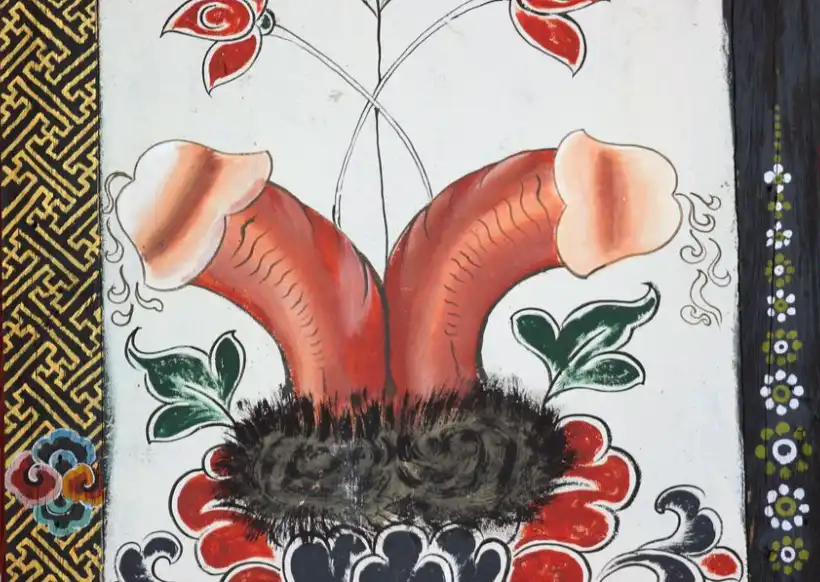
And then there is also the term 'bloma', within Tantric Buddhism, with a more abstract consideration, but within the spiritual or humorous, as in the case of its use by the atsaras.
On the way back to Pyay, the speed and stifling heat returned with the potholes on the road.●